
Labelled Reagent Products: The Ultimate Guide for Researchers and Laboratories
In today’s era of advanced scientific discovery, Labelled Reagent Products have become indispensable tools for researchers, laboratories, and diagnostic centers worldwide. These specialized reagents, tagged with isotopes, fluorescent markers, or enzymes, allow scientists to track molecular interactions, identify compounds, and measure reaction kinetics with precision. From drug development to environmental testing, their applications are vast and continually expanding.
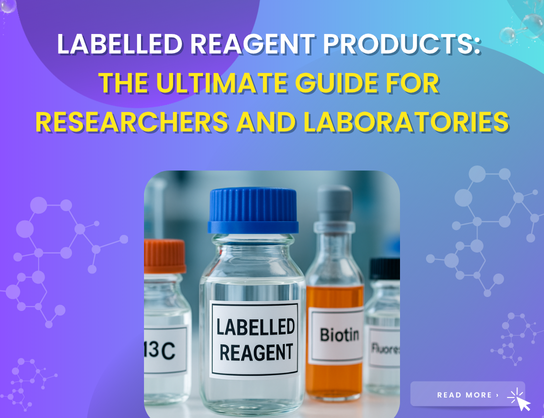
What Are Labelled Reagent Products?
Definition and Core Concept
Labelled reagent products are chemical substances modified with a detectable tag such as a radioactive isotope, fluorescent dye, or stable isotope. These labels enable scientists to trace the presence, movement, and transformation of molecules during chemical or biological reactions.
Historical Development of Labelled Reagents
The concept originated in the mid-20th century when scientists began using radioisotopes like carbon-14 to study metabolic pathways. Over the years, innovations in chemistry and molecular biology have led to the development of safer and more sophisticated labels, such as stable isotopes (13C15N) and fluorescent markers used in genomics and proteomics research.
Importance in Modern Research and Diagnostics
In laboratories, labelled reagents act as molecular beacons, providing clear visibility into reactions that are otherwise invisible to the naked eye. They are vital for quantitative assays, tracer studies, and bioanalytical measurements - especially in fields like pharmacokinetics, cell biology, and medical diagnostics.
Types of Labelled Reagent Products
Isotopically Labelled Compounds
Isotopically labelled compounds are molecules containing atoms replaced by their isotopic forms. These are mainly used for metabolic tracing and reaction mechanism studies.
Stable Isotope Labelled Reagents
Stable isotopes like 13C2H and 15N are non-radioactive, safe, and suitable for use in biological systems. They are used in metabolomics, proteomics, and nutritional studies to track biomolecule transformations.
Radioisotope Labelled Compounds
Radioactive isotopes such as 3H14C and 32P provide high sensitivity for detecting minute quantities of materials. Though they require strict handling protocols, they remain invaluable for pharmacokinetic studies and environmental monitoring.
Fluorescent and Enzyme Labelled Reagents
Fluorescently labelled compounds emit light upon excitation and are widely used in microscopy, flow cytometry, and molecular diagnostics. Enzyme-labelled reagents, on the other hand, are crucial in ELISA assays and other immunoassay platforms.
Biotin-Labelled and Antibody Conjugates
These reagents combine biotin-streptavidin interactions or antibody specificity for precise molecular targeting. They are used in protein purification, Western blotting, and immunohistochemistry.
How Labelled Reagent Products Are Manufactured
Chemical Synthesis and Purification Processes
The synthesis involves substituting specific atoms or molecules with their labelled equivalents under controlled conditions. Post-synthesis, rigorous purification steps like chromatography and crystallization ensure product accuracy and purity.
Quality Control and Validation Procedures
Each batch undergoes analytical verification using techniques such as mass spectrometry (MS) and nuclear magnetic resonance (NMR) to confirm label incorporation. Compliance with ISO and GMP standards ensures product reliability.
Applications of Labelled Reagent Products in Science
Proteomics and Metabolomics Studies
Labelled reagents help identify and quantify proteins and metabolites within complex samples. Stable isotope labelling in LC-MS workflows enhances reproducibility and accuracy.
Drug Discovery and Pharmacokinetic Research
In pharmaceutical R&D, labelled reagents trace how drugs are absorbed, distributed, metabolized, and excreted - essential for determining drug efficacy and safety.
Diagnostic Imaging and Molecular Biology
Radioisotope-labelled compounds assist in PET and SPECT imaging, while fluorescent labels aid in DNA sequencing and gene expression analysis.
Environmental and Agricultural Testing
Labelled tracers are employed to study pollutant movement, soil nutrient dynamics, and pesticide degradation, promoting sustainable agricultural practices.
Advantages of Using Labelled Reagent Products
Enhanced Detection Accuracy
Labelled reagents are essential for precise quantification and localization of molecules in complex samples. By tagging specific molecules with fluorescent or isotopic labels, researchers can trace even minute interactions that would otherwise go unnoticed. This leads to more accurate experimental data, particularly in analytical chemistry, biochemistry, and pharmacology.
Quantitative and Qualitative Analysis Benefits
These products are used to achieve both quantitative measurements-like concentration levels-and qualitative assessments of molecular behavior. For example, stable isotope-labelled compounds enable mass spectrometry-based quantification, providing reproducible results that are critical for regulatory submissions and clinical studies.
Reproducibility and Global Research Standards
Reproducibility is a cornerstone of scientific integrity. Labelled reagents, due to their standardized synthesis and traceability, support consistent results across multiple laboratories worldwide. They align with international quality standards such as ISO 9001 and Good Laboratory Practice (GLP), ensuring trust and comparability in global research efforts.
Challenges and Limitations
Cost and Availability Issues
One of the main challenges associated with labelled reagents is their high production cost. The synthesis and purification of isotopically or fluorescently labelled compounds require specialized equipment and expertise. Furthermore, certain isotopes are scarce, leading to supply constraints and longer lead times.
Handling and Safety Concerns
Radioisotope-labelled reagents pose health and environmental risks if mishandled. Laboratories must follow strict protocols for storage, use, and disposal to comply with radiation safety regulations. Even non-radioactive reagents may require temperature-controlled environments to maintain stability.
Regulatory and Compliance Barriers
Regulatory oversight varies globally. Laboratories dealing with labelled reagents must navigate multiple regulatory frameworks such as OECD, FDA, and IAEA guidelines. Compliance adds to administrative overhead, but it’s vital for ensuring ethical and safe scientific practices.
Market Overview and Leading Suppliers
Global Market Trends (2025 Update)
The global market for Labelled Reagent Products is projected to exceed USD 2.3 billion by 2027, driven by advances in proteomics, molecular diagnostics, and AI-driven drug discovery. North America currently leads the market, followed by Europe and the Asia-Pacific region, where research investments are rising rapidly.
Top Manufacturers and Their Product Ranges
Leading companie such as SIMSONPHARMA , offering a wide range of stable isotope-labelled and fluorescent reagents. Emerging players in Asia are introducing cost-efficient alternatives and innovative labelling chemistries tailored for genomic and proteomic workflows.
Emerging Innovations in Labelled Reagents
Recent trends include AI-assisted reagent synthesis, microfluidic labelling systems, and eco-friendly isotope recovery technologies. These innovations aim to reduce production costs and improve sustainability while maintaining scientific precision.
How to Choose the Right Labelled Reagent Products
Factors to Consider Before Purchase
When selecting labelled reagents, consider the intended application, sensitivity requirements, label type, and analytical technique compatibility. For example, stable isotope-labelled reagents are ideal for LC-MS workflows, while fluorescently labelled ones are better suited for imaging applications.
Supplier Reputation and Certification
Always source reagents from reputable suppliers with certifications such as ISO 13485 or GMP compliance. Trusted suppliers provide detailed Certificates of Analysis (CoA) and Material Safety Data Sheets (MSDS) to ensure transparency and traceability.
Storage, Shelf Life, and Compatibility
Labelled reagents are often temperature-sensitive and require storage at specific conditions (e.g., -20°C for enzyme conjugates). Check for chemical stability, solubility, and cross-reactivity with other assay components to maintain experimental integrity.
Future of Labelled Reagent Products
Integration with AI and Automation in Research
The future of labelled reagents is closely tied to artificial intelligence and automation. AI-powered analytics can predict label stability, optimize synthesis pathways, and enhance real-time data interpretation. Robotic automation ensures precision dispensing and error-free sample tracking, boosting lab productivity.
Sustainable Production and Green Chemistry Approaches
With growing awareness of environmental impact, manufacturers are moving toward green chemistry protocols-minimizing waste, recycling isotopes, and replacing hazardous solvents. This shift not only promotes sustainability but also reduces operational costs for laboratories.
Frequently Asked Questions (FAQs)
1. What are Labelled Reagent Products used for?
They are used to trace and analyze molecular interactions in biological, chemical, and environmental studies. Applications include drug metabolism studies, diagnostics, and molecular imaging.
2. Are stable isotope-labelled reagents safer than radioactive ones?
Yes. Stable isotopes like 13C and 15N are non-radioactive and completely safe, making them ideal for use in both in-vitro and in-vivo studies.
3. How do I store labelled reagents properly?
Storage requirements depend on the reagent type. Most should be kept frozen or refrigerated, away from light and moisture, to preserve stability.
4. What’s the main difference between fluorescent and enzyme-labelled reagents?
Fluorescent reagents emit light upon excitation, used mainly for imaging, while enzyme-labelled reagents produce colorimetric signals in assays such as ELISA.
5. How can I ensure the quality of a labelled reagent product?
Check for purity data, isotopic enrichment, and certification from the supplier. Reliable vendors provide CoAs and validation data for every batch.
6. Where can I purchase high-quality labelled reagents?
You can source them from trusted suppliers such as Simsonpharma.
Conclusion: Empowering Scientific Discovery with Labelled Reagent Products
Labelled Reagent Products represent one of the most powerful advancements in modern analytical and biological sciences. They provide scientists with the ability to visualize, quantify, and trace molecular processes that were once invisible. Despite their cost and handling challenges, their value in research, diagnostics, and innovation is unparalleled.
As technology advances and sustainability becomes a global priority, the future of labelled reagents will likely combine AI integration, eco-friendly synthesis, and precision automation-driving a new era of data-driven, environmentally responsible science.
